
OnlyFans subscribers face a simple problem: the platform tells you almost nothing about who is behind a page before you pay. There is no built-in discovery feed, no public directory, and no buyer-protection layer that flags a poorly run account in advance. This guide lays out a practical due-diligence framework you can run in ten minutes, before any card is charged.
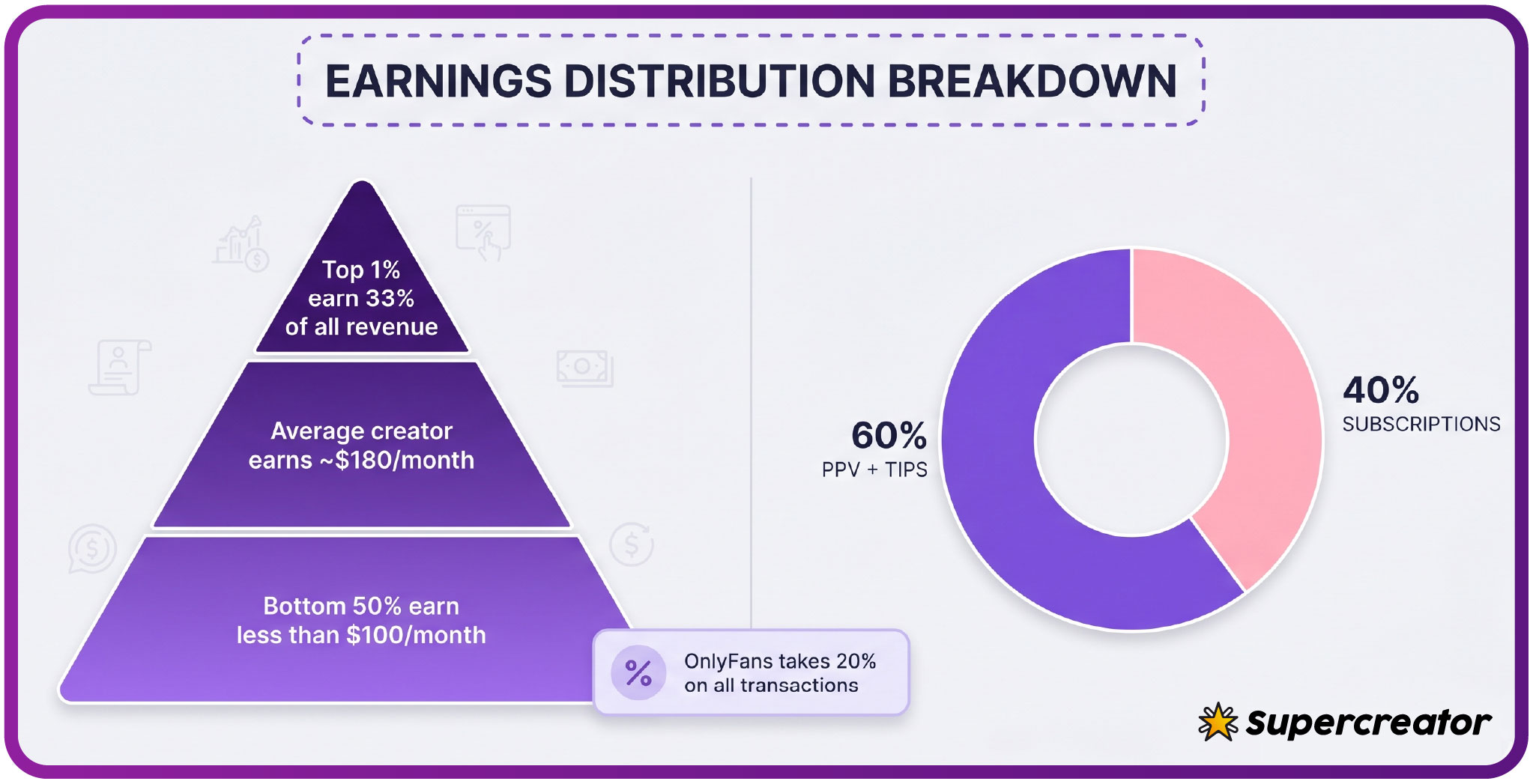
A single paid page costs between $4.99 and $49.99 per month, the platform takes 20%, and the creator keeps 80%. Most disappointing subscriptions are not outright fraud; they are pages that stopped posting months ago and never updated their pricing or bio.
Platform-Native Verification Badges and Identity Confirmation
That check confirms one thing only: the person who registered the account matches the identity documents submitted. It does not confirm that the page owner produces the content, that the content is exclusive, or that the account will remain active.
It is an identity endorsement. A page can be fully verified, run by an agency rather than the named person, and still be technically compliant with platform rules.
- Blue check badge: identity documents matched to the account holder; the strongest native signal available.
- No badge, active page: either verification is pending or the creator chose not to complete it; treat as unconfirmed.
- Badge plus zero archive: identity confirmed but no delivery history; verification without output proves little.
- Badge on a rebranded page: name and content changed while the badge stayed; identity is constant, the offer is not.
- Misconception one: the badge does not guarantee a posting schedule.
- Misconception two: the badge does not confirm the person in the media is the account holder.
- Misconception three: the badge does not cover billing disputes or refund requests.
- Limitation one: verification status is not shown on preview cards in every context.
- Limitation two: a verified account can still be sold or handed to a management team after approval.
Tip: the badge answers “is this a real registered person,” not “is this page worth paying for.” Treat identity verification as the first filter, never the only one.
Reading BestOnlyFans Ranking Cards for Authenticity Markers
Because OnlyFans has no discovery feed or directory, ranking sites exist to fill that gap, and their card layouts carry useful metadata.
BestOnlyFans cards aggregate observable page signals rather than opinion scores, which makes them useful for consistency checks across time. What you look for is stability: a page that has held a similar price and posting rhythm for months behaves differently from one that appeared last week.
| Ranking Card Field | Legitimacy Signal | Interpretation Caution |
|---|---|---|
| Price history stability | Base price held within the $4.99–$15 band across months | Promotional first months below $4.99 are normal; a base price that never settles is not |
| Activity score | Recent posts logged within the last 7–14 days | A single burst of posts after a long gap can reset the score without fixing the pattern |
| Media count trajectory | Steady upward growth rather than flat or reset counts | Counts can grow through bulk uploads of low-effort posts |
| Historical presence | Card exists with older snapshots over several months | A brand-new card on a brand-new page proves nothing about longevity |
| Review distribution | Reviews spread across many dates rather than clustered | Clustered positive reviews can indicate coordinated posting |
Use the card as a screening tool, then confirm the same signals inside the page itself. Divergence between a card and what you see after subscribing is the clearest warning sign there is.
Content Archive Depth as Credibility Indicator
A real page accumulates history. You can read that history through the archive before paying, because post dates and media counts are visible on most profiles.
- First post date: how long has the page existed in months, not in follower count?
- Posting frequency consistency: are gaps between posts roughly even, or are there multi-month silences?
- Content type evolution: did the format develop over time, or does everything look uploaded in one session?
- Seasonal variation: are there holiday or event posts that anchor the timeline to real calendar dates?
- Recent activity maintenance: has posting continued in the last two weeks, or did it stop after a promotional push?
A bio claiming daily updates with forty posts over two years is arithmetically inconsistent, and that inconsistency is a legitimacy signal in itself. Check the newest three posts and the oldest three posts side by side; the gap between them tells you more than any bio claim.
Archive depth also interacts with pricing. A page with two years of history and a stable rate near the middle of the $4.99–$15 typical band has demonstrated that people renew at that number, which is a harder signal to fake than a follower count.
Engagement Pattern Analysis: Real Fans Versus Inflated Signals
Engagement is the easiest metric to purchase and the hardest to verify, which is why patterns matter more than totals.
Tips can reach $100 on a single post, so a page showing occasional large tips alongside many small ones looks like a real community. Paid chat commonly runs $3–$5 per message, so a fast, specific free reply is a genuine signal of an actively managed page.
Comments arriving within minutes of every post, at the same hours, from the same small group suggest automation rather than an audience. Organic comment sections have uneven timing, questions that go unanswered, and regulars who reference earlier posts.
Cross-Platform Presence Verification Techniques
Most creators maintain at least one public social account, and consistency across platforms is a strong authenticity marker.
- Username continuity: does the same handle appear on two or more platforms with matching branding?
- Content cross-references: do the public posts point to the paid page by name rather than vaguely?
- Timeline alignment: do public posts reference events that match the paid page’s archive dates?
- Link hygiene: does the public profile link to the page directly, or through a chain of redirects?
If a page claims a large following but no public account exists anywhere, that absence is data. It does not prove fraud, but it removes a layer of confirmation you would otherwise have.
Pricing Behavior Red Flags and Anomaly Detection
Price is set by the creator within platform limits, and it moves in ways that reveal intent. Paid subscriptions run from $4.99 to $49.99, with most pages clustering between $5 and $10.
Promotional first months can go below the floor — a $3 first month is a legitimate marketing mechanic — but a standing base rate below $4.99 is not.
- Sub-minimum base rates: a permanent advertised price below the $4.99 floor.
- Extreme tier compression: several tiers priced within a few cents of each other with no described difference.
- Identical PPV pricing: every pay-per-view message priced the same regardless of content length.
- Volatile monthly swings: base price jumping between $5 and $45 on a rolling basis.
- Mismatched bundle math: a three-month bundle that costs more than three separate months.
- Unexplained promotional frequency: near-permanent discounts that make the regular price meaningless.
Note too what happens when a creator raises the price: auto-renew stops, and existing access continues until the paid period ends.
A page that repeatedly raises and discounts is testing how much friction its audience will absorb. PPV messages unlock up to $50, so a page pushing constant unlock prompts deserves a closer look at whether the base subscription alone delivers value.
Payment Entry Timing: When Verification Is Most Critical
Verification intensity should scale with risk. An established page with a stable base price and years of archive depth needs a two-minute check. A page that appeared three weeks ago and is running a hard promotional push needs the full framework.
Watch for subscriptions solicited through direct messages. A message-driven pitch compresses your decision window and is the single most common context for rushed, regretted payments.
| Risk Scenario | Verification Urgency | Recommended Checks |
|---|---|---|
| Established page, stable price, long archive | Low | Confirm recent posting date and price stability |
| New page under 30 days old | High | Badge status, archive depth, cross-platform presence, message reply test |
| Promotional surge page with steep discount | Medium to high | Compare promotional price against stated base price and check renewal terms |
| Direct-message-solicited subscription | High | Full check set plus confirmation that the pitch matches the public page description |
The card verification hold of $0.10, refunded within days, matters here too: a small temporary charge at signup is normal, and a larger unexplained one is not.
Post-Subscription Monitoring for Legitimacy Continuity
Verification does not end at payment. The first month tells you whether the page delivers what the preview promised, and a short evaluation schedule keeps that judgment honest rather than emotional.
- Week one: log post frequency and compare it against the archive pattern you observed before paying.
- Week two: check whether content type matches the page description and whether PPV messages are priced sensibly against length.
- Week three: send one message and note response time and specificity.
- Week four: review your total spend including tips and unlocks, and compare it against the base subscription cost.
- Week five: decide whether to continue at renewal, and check whether the price changed before the renewal date.
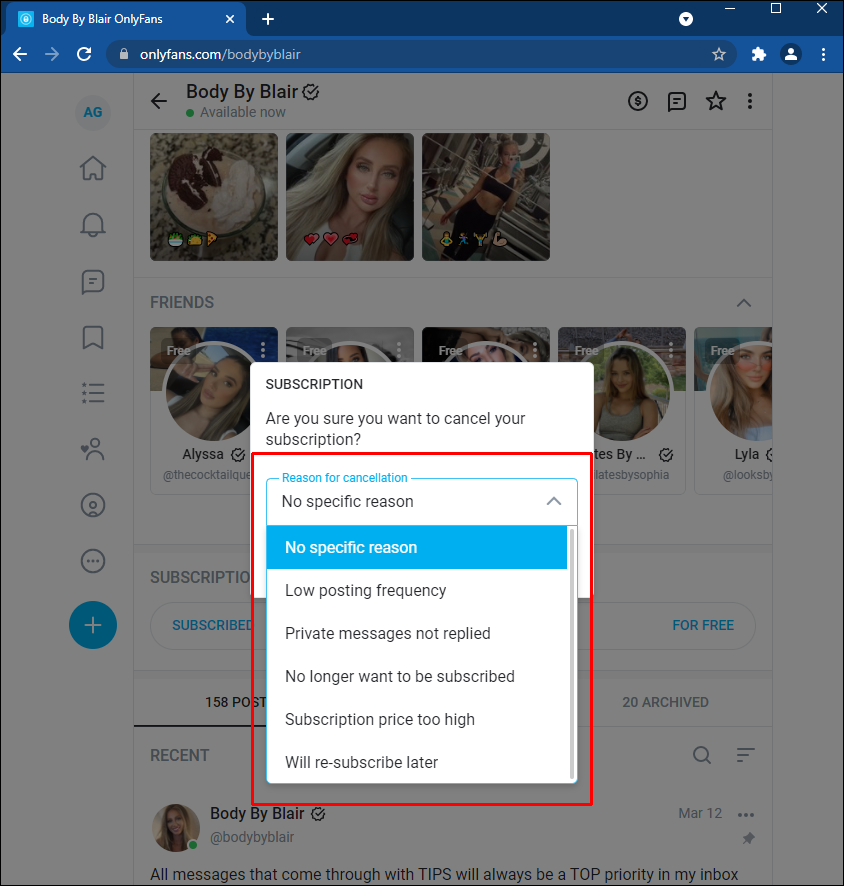
If a page’s posting rhythm collapses in week two or three, cancel rather than waiting for a recovery. Cancellation is straightforward, and the only cost of a wrong guess is one month at the base rate.

Treat your own account security as part of the process. Enable two-step authentication, keep payment methods separate from your main accounts, and never share verification codes with anyone who claims to be from the platform. Subscribers who work from curated lists such as the best onlyfans australia models tend to notice that accounts surviving scrutiny share the same traits: consistent archives, stable pricing, and clear cross-platform identity.
FAQ
Can a verified OnlyFans badge ever appear on a scam page?
It does not prevent the account from later being mismanaged, handed to a team, or used to promote content that does not match the description.
How far back should consistent posting history extend for confidence?
Below thirty days, you are evaluating intent rather than a track record, which is why new pages warrant the full check set before you pay.
What does BestOnlyFans classify as suspicious price volatility?
Repeated base-price changes across a short window, especially swings between the low and high ends of the $4.99–$49.99 range, are treated as volatility.
Is cross-platform identity checking considered acceptable subscriber behavior?
Digging into personal life or attempting to unmask someone who deliberately keeps platforms separate crosses a line and is not necessary for deciding whether to subscribe.